
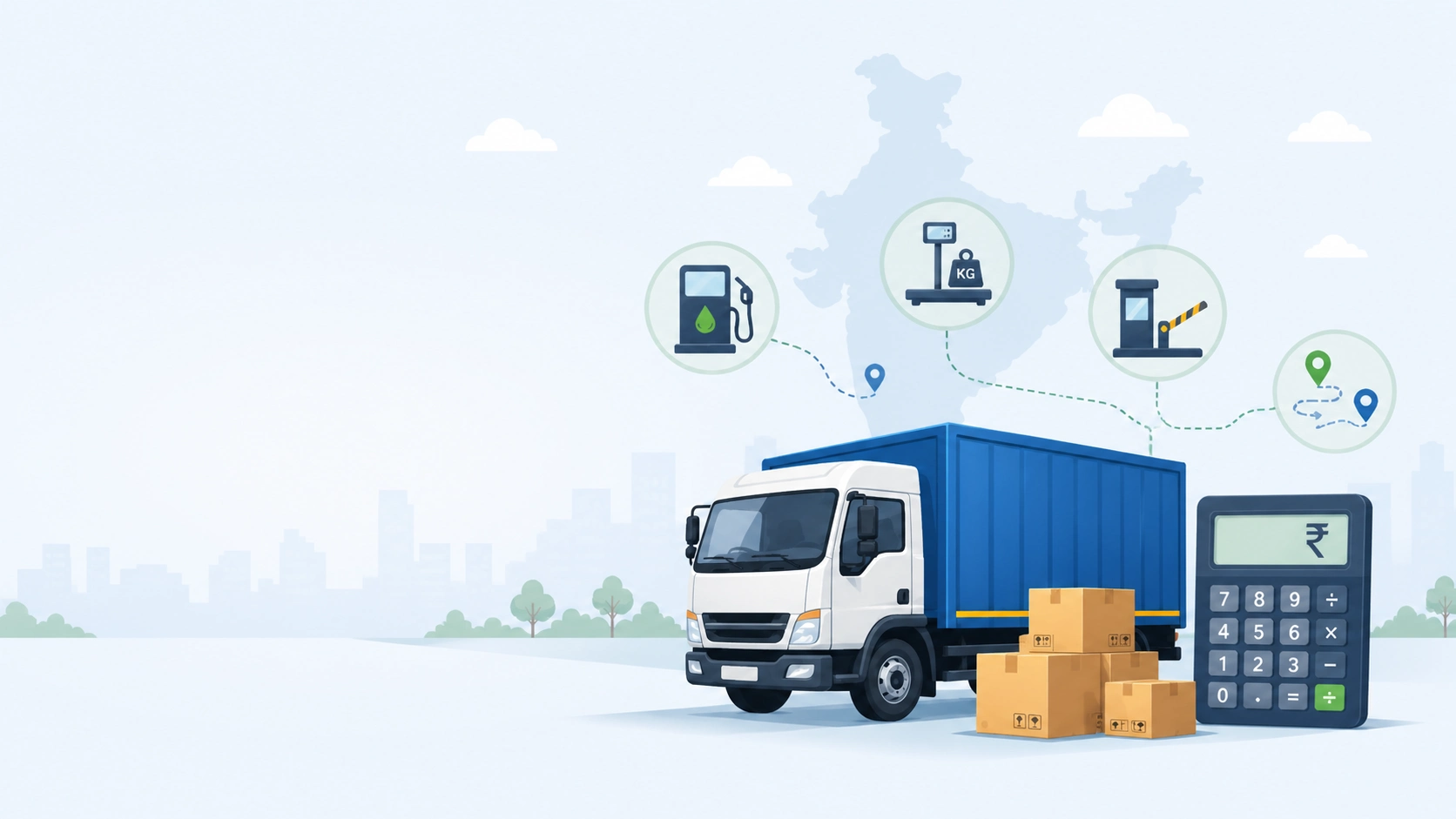
India’s logistics industry relies heavily on road transportation. In fact, trucks move more than 60% of the country’s freight, making them the backbone of supply chains across industries.
But one question many businesses and individuals ask before booking a truck is:
“How are truck transportation charges calculated in India?”
Understanding how freight rates are determined can help you estimate shipping costs, choose the right vehicle, and save money when transporting goods. In this guide, we’ll break down the key factors that influence truck transportation charges in India.
Average Truck Transportation Charges in India
Truck transport rates usually depend heavily on the type of truck and the distance traveled. While rates change daily, here are some typical industry estimates:
- ₹15 – ₹85 per km depending on truck size and cargo type.
- ₹50 – ₹110 per km for a heavy 20-ton Full Truck Load (FTL).
- ₹1,400 – ₹3,600 per ton for Part Truck Load (PTL) shipments up to 500 km.
(Note: These are average figures. Actual charges depend on current market conditions and operational factors).
Estimated Rate by Truck Type
| Truck Type | Payload Capacity | Average Rate Estimate |
| Mini Truck / Pickup (e.g., Tata Ace) | 500 kg – 1.5 tons | ₹12 – ₹20 per km |
| LCV (Light Commercial Vehicle) | 1.5 – 5 tons | ₹15 – ₹25 per km |
| 10-Wheeler Truck | 16 – 20 tons | ₹25 – ₹40 per km |
| Multi-Axle Container | 25+ tons | ₹35 – ₹55+ per km |
8 Key Factors That Affect Truck Transportation Charges
When a transporter quotes a price, they don’t just guess a number. They look at these core factors:
1. Distance and Route Conditions
Distance is the primary factor. The longer the distance, the higher the total cost. However, the per-kilometer cost may actually decrease for very long routes because fixed costs are spread out. Additionally, transporting goods through hilly terrain, poor village roads, or remote areas increases costs due to higher fuel consumption and travel time.
2. Type and Size of Truck
As seen in the table above, larger trucks cost more because they consume more diesel, have higher toll taxes, and carry higher maintenance costs.
3. Type of Goods Being Transported
The nature of your cargo impacts the price.
- Fragile goods (like glass) require smoother driving and special handling.
- Perishable items (like food or medicine) require expensive refrigerated trucks (reefers).
- Heavy industrial machinery might require specialized flatbed carriers.
4. Fuel Prices
Fuel is the single largest operational cost in trucking (often making up 50-60% of the total expense). When diesel prices increase, transport companies must adjust their freight rates immediately to survive.
5. Toll Charges and Road Taxes
Highways in India have toll plazas. If your route crosses 10 state borders, the tolls will be heavy. Additional costs include state entry taxes and commercial road permits, which are added to the final quotation.
6. Driver Charges and Operational Costs
Transportation isn’t just about the truck; it’s about the people and maintenance. Rates include driver wages, daily allowances (bhatta), vehicle insurance, and general wear and tear.
7. Seasonal Demand
During peak periods-like Diwali, major harvest seasons, or high industrial demand at the end of the financial year-truck availability drops. When demand is high and supply is low, freight charges naturally increase.
8. Return Load Availability
This is a massive hidden factor. If a driver drops your goods in a city where he can easily get a “return load” (backhaul) to come home, your price will be lower. But if you send him to a remote area where he has to return empty, he will charge you extra to cover the fuel loss of the empty return trip.
Additional Charges to Watch Out For
Besides the base per-km rate, your final bill might include:
- Loading and Unloading Charges (Mathadi): Labor costs for handling the goods.
- Detention/Waiting Charges: If the truck has to wait 6 hours at your factory to get loaded, the driver will charge a penalty for the lost time.
- GST and Documentation Fees.
The Simple Formula to Estimate Truck Freight Cost
Want to do a quick calculation yourself? A simplified formula used by many transporters is:
Truck Cost = (Distance × Per Km Rate) + Toll Charges + Driver Expenses + Additional Charges
Example Calculation: Let’s say you need a 10-wheeler truck for a 500 km journey.
- Distance: 500 km
- Rate: ₹45/km
- Base Cost: 500 × 45 = ₹22,500
- Add Tolls & Other Charges: ~₹2,000
Total Estimated Cost: ₹24,500
How Online Truck Booking Platforms Simplify Pricing
Traditional truck booking involves calling multiple local transporters, bargaining for an hour, and still worrying about hidden charges popping up during the trip.
Modern logistics platforms like ours simplify this entire process. Instead of doing the math yourself, we provide:
- Instant, Fair Estimates: We calculate the current market rate based on live data.
- Transparent Pricing: No hidden detention or sudden toll demands mid-journey.
- Hassle-Free Coordination: We tap into our verified network to find the exact truck you need, handling all the negotiations on your behalf.
By using an online truck booking platform, businesses can quickly compare options and book reliable transport with complete peace of mind.
Ready to Skip the Calculation Headache?
Tell us what you need to move, and we will coordinate the best truck at a fair, fixed price today. Book Your Truck Now With LoadUp Online Truck Booking App